Reflections on Sumi-e Meditations: Temple Gardens Night Walk, Kyoto, Japan
chiru o mide
kaeru kokoro ya
sakurabana
mukashi ni kawaru
shirushi naruran
—Saigyō
This frame of mind
lets me go back, even without
seeing the blossoms fall;
maybe it's some sign I am
no more the one I used to be.
In late November, 2019, while traveling in Japan with a dear friend, we spent a long evening walking in Kyoto from temple to temple on the occasion of the compounds opening their enclosed gardens to the public for night contemplation. It was a quietly poetic experience, lingering in my mind during the weeks that followed, much as were our temple visits in Tokyo and Nara and the profound dry garden of Ryōan-ji.
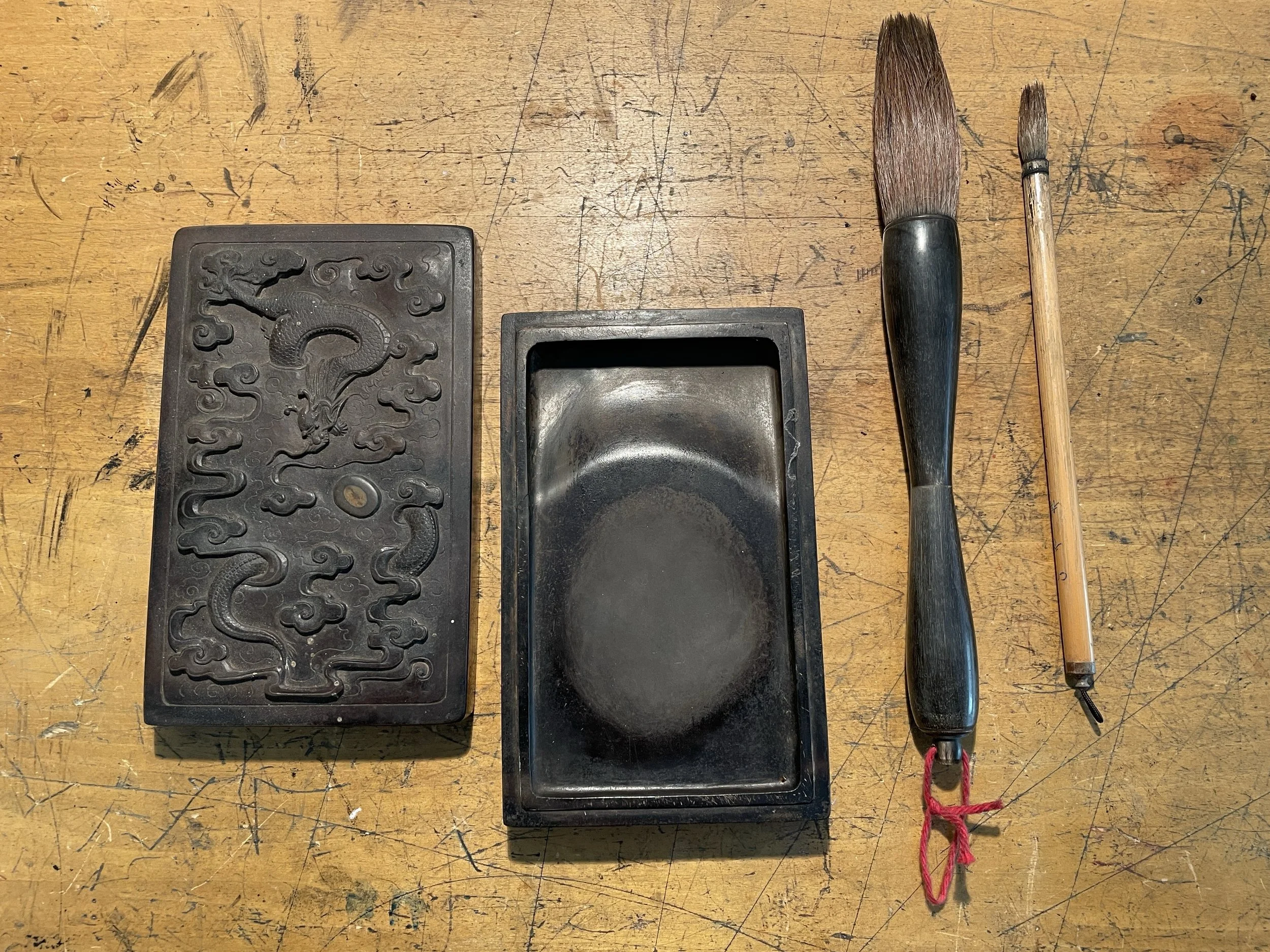
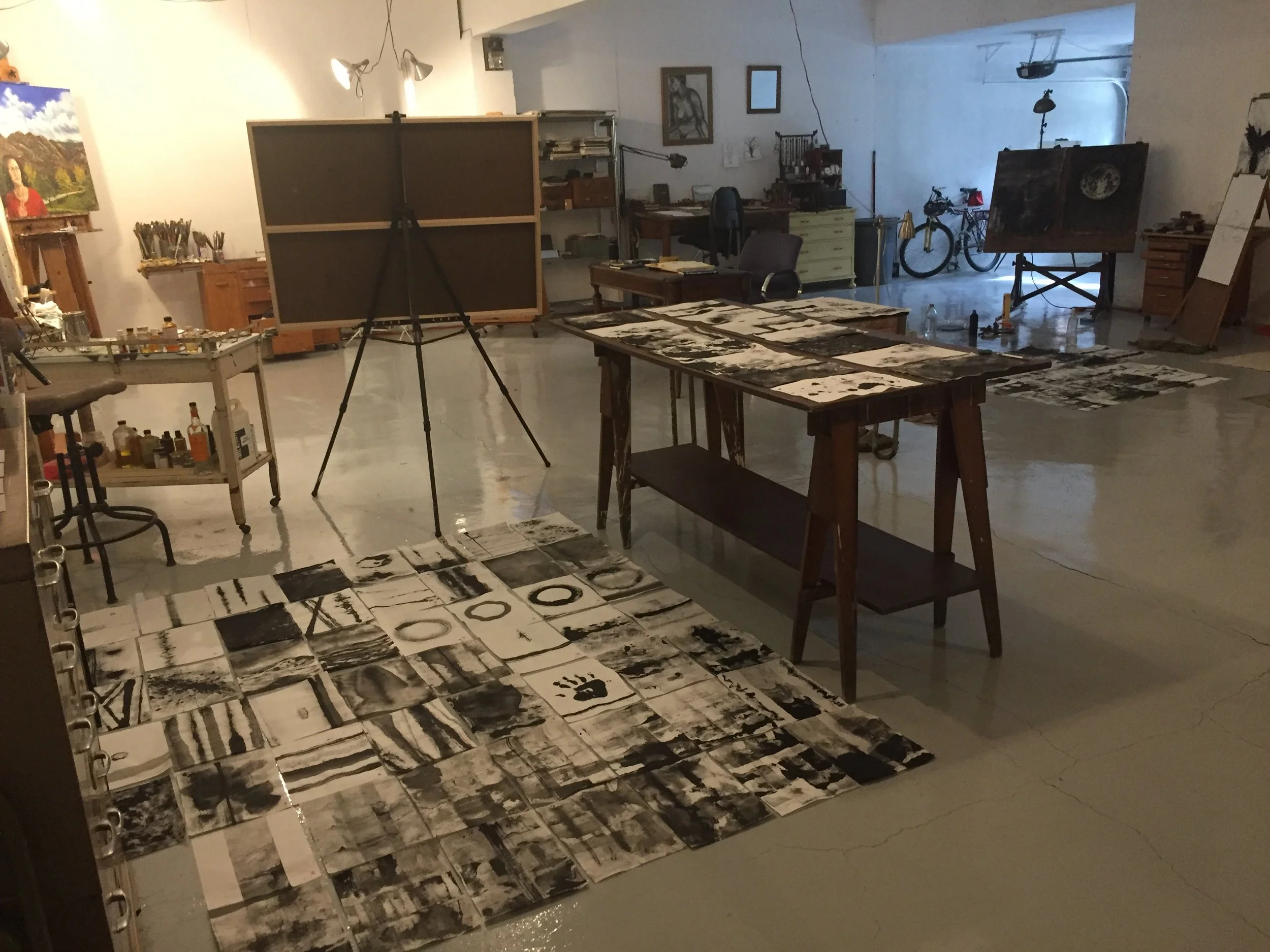
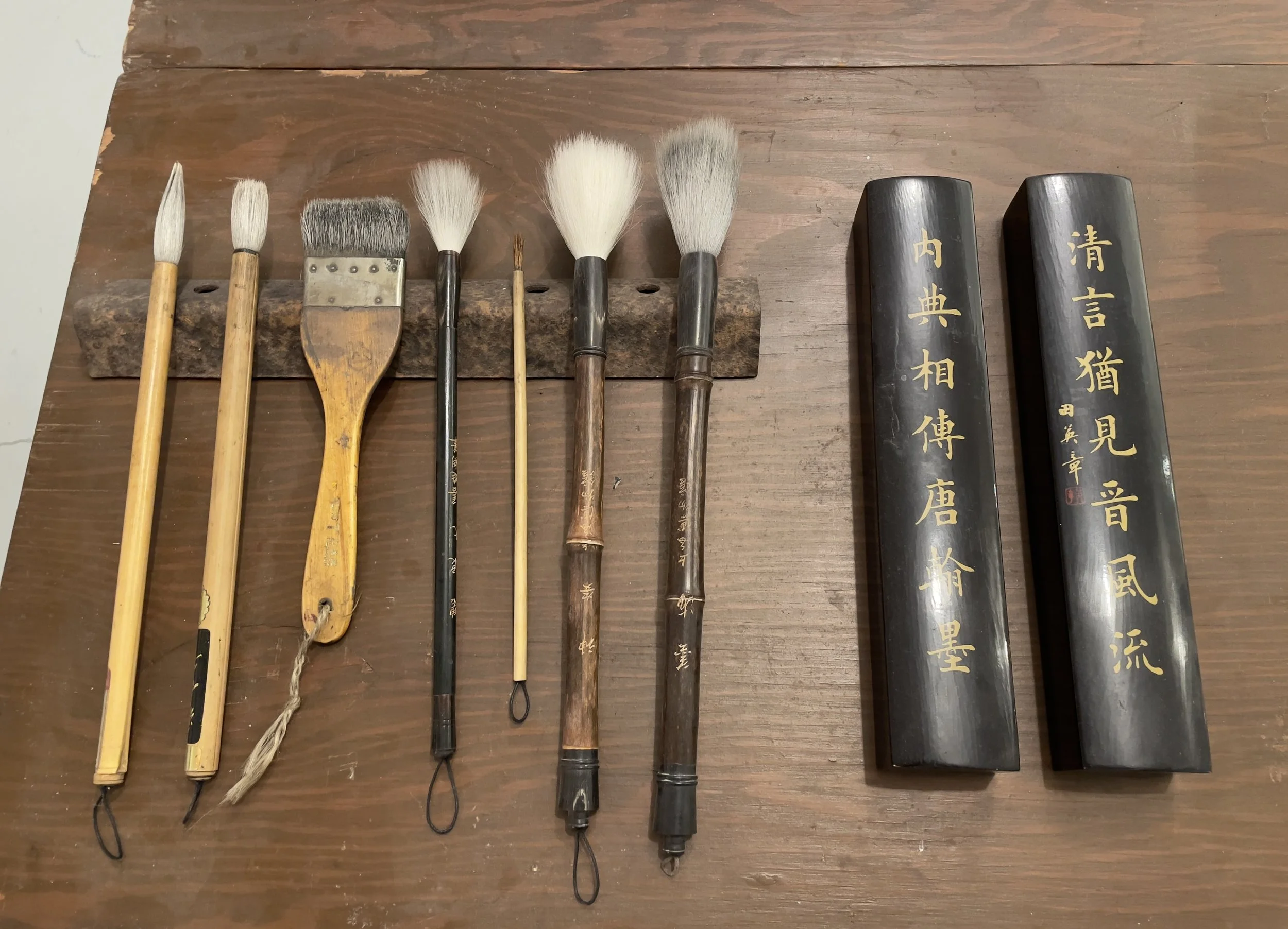
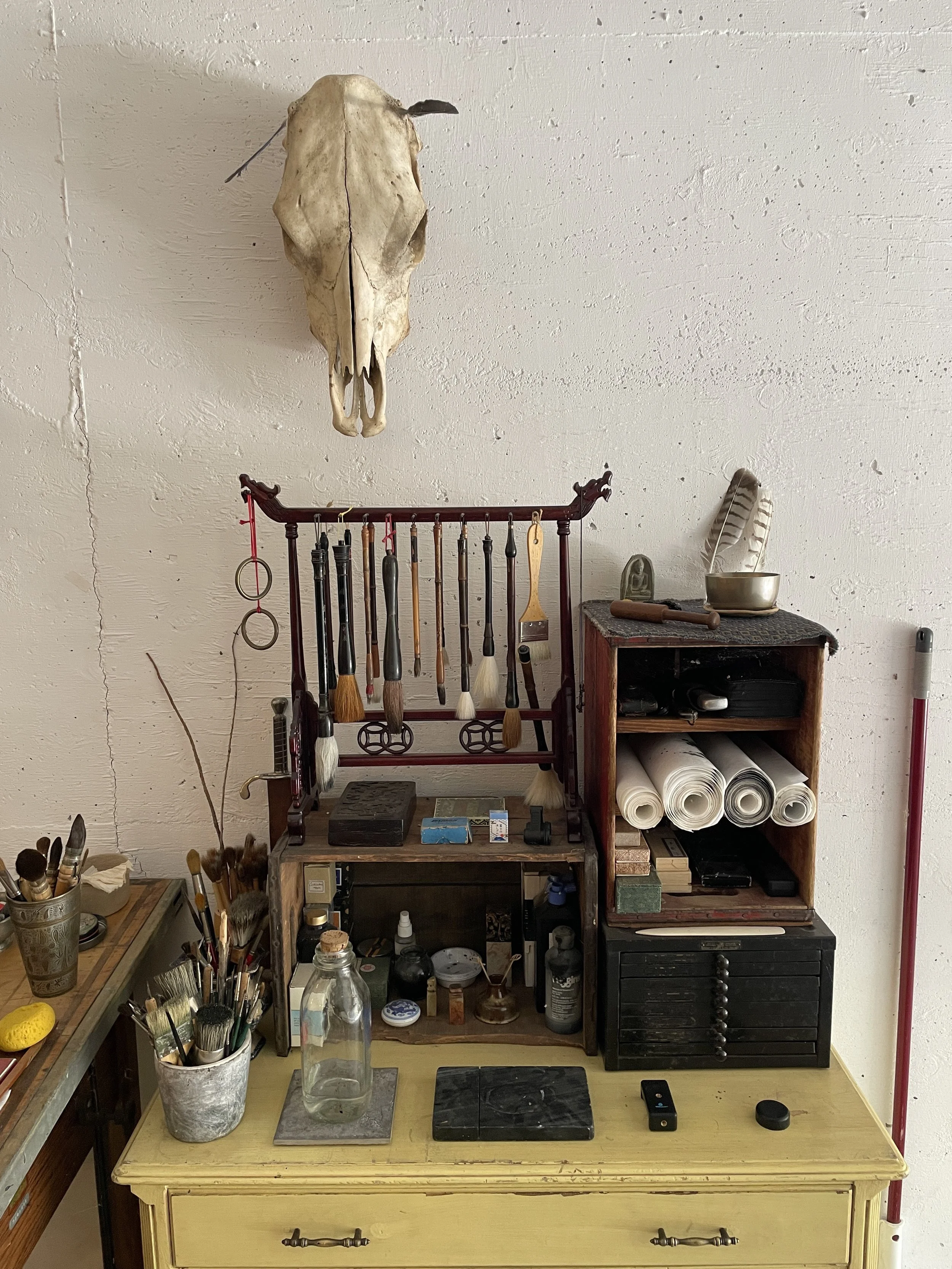
Returning home to Los Angeles County, in my studio at the edge of Angeles National Forest, I unwrapped paper I had purchased in Kyoto, gathered handmade brushes and an antique ink stone and ink cakes I had purchased in Xi’an years earlier, gathered bottles and cakes of sumi from Japan, meditated in open awareness, and entered a sort of creative fugue state, grinding ink and pouring and rolling and dripping and smearing and brushing the fluid freely—sometimes deep black, sometimes varying gray dilutions—without objective on the concrete floor of my studio. The process encompassed elements of painting, drawing, and even printmaking of a sort. Soon my hands and bare feet were black and the floor stained—echoes of this making. It was reminiscent of the somaesthetic dance-flow rhythms of my early large abstract work, driven by intuitive body-mind movements. Forgetting the self awhile, as Dōgen did, allowing the ink works to drift via unconscious interrelationships, each one birthing another until, after several winter weeks and into the new year, and just before Covid arrived to change the world, I completed 189 sheets, stopping only when the loose paper I’d purchased in Kyoto ran out and having decided that the series should be divisible by three. The musical sound of the grinding, the beauty of grays and blacks—sooty ink born in fire reminiscent of the wildfire-charred oaks near my studio door—the absorbing clarity of the mulberry paper, and the engaged focus of spontaneous gestures—all leaving traces of experience and merging my travels in Kyoto, Nara, Tokyo, and beyond with the lived wild nature of my California home.
—Daniel Barber
The reason why the East has paid so much attention to its ink is that the black substance was identified in the minds of the calligraphers and artists with the root of all colours, the root of all forms, the undifferentiated substance of which the world consists. In drawing with ink they felt they were engaging in an activity that brought them close to the ground of visible being. They therefore experimented widely with the densities and textures of their material, building up structures which depended on vivid contrasts of ink-quality for their effects. A brush scarcely moist with very black ink produces a very different stroke from one thoroughly soaked in pale ink. A black produced by a single dark wash has a completely different quality from one made by building up layers of paler touches. A single area of tone may change quality from place to place. And so on.
—Philip Rawson, Drawing
Note:
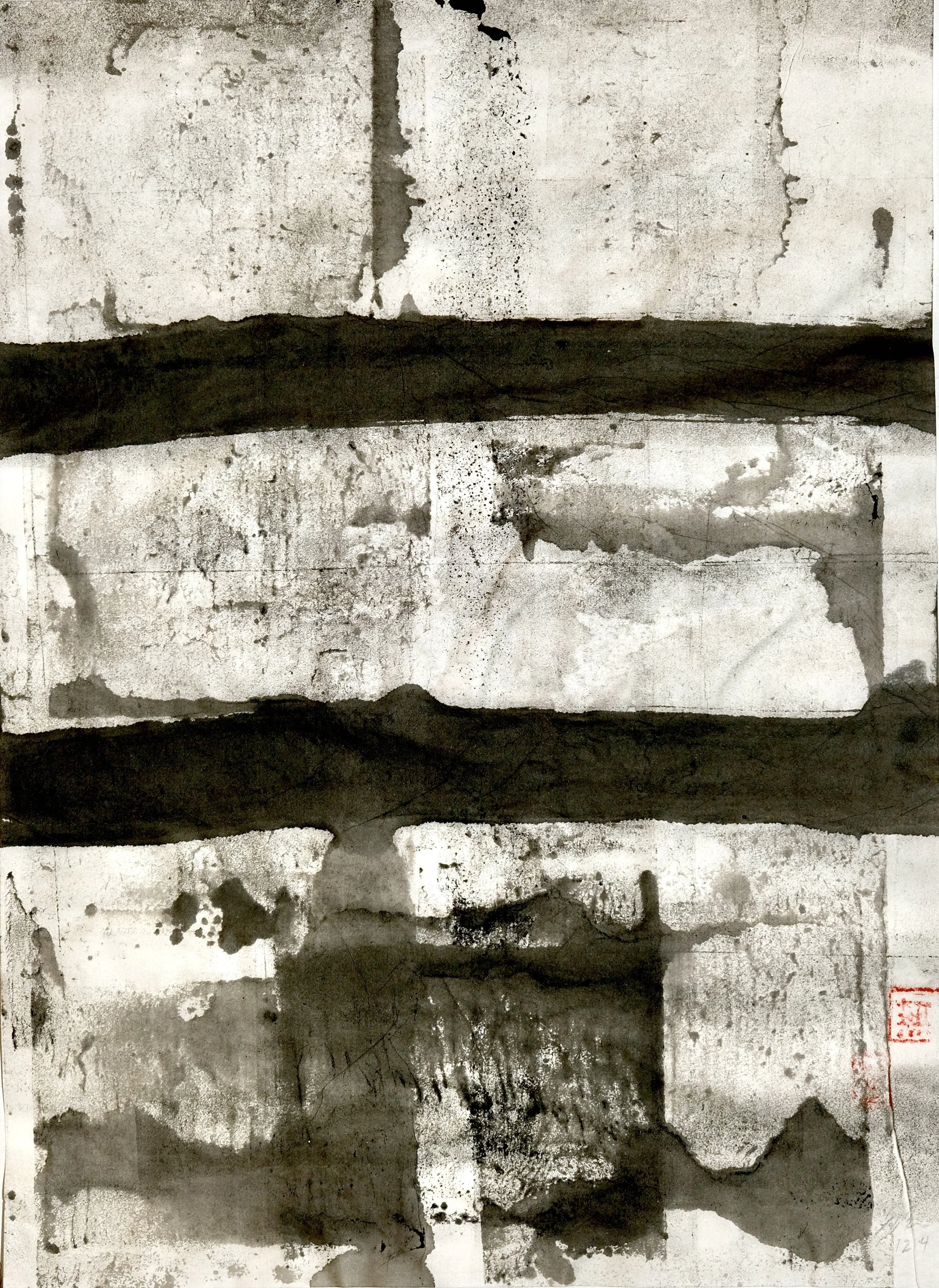
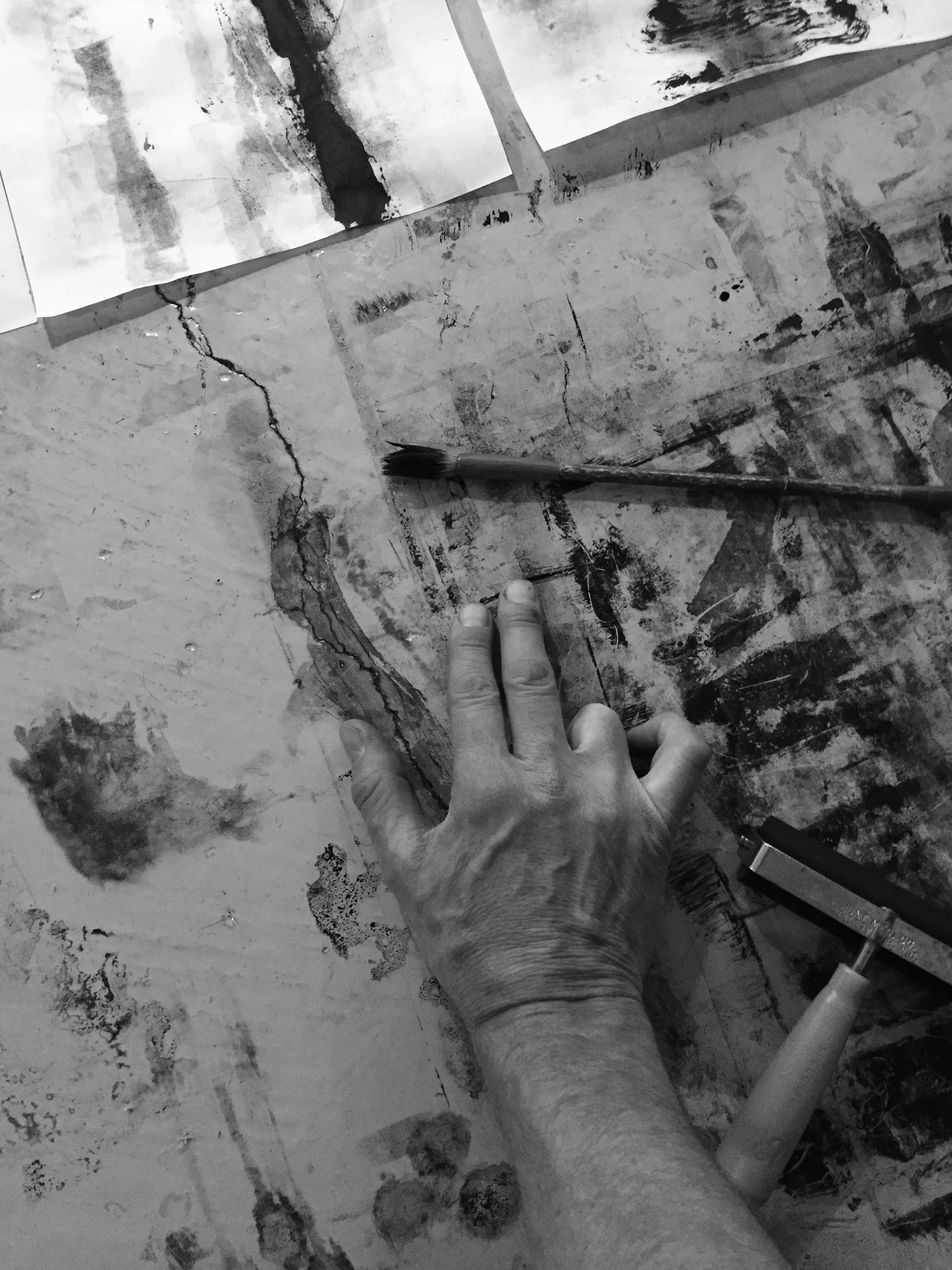
Each Sumi-e (sumi 墨 = black ink, e 絵 = painting) on paper (washi: wa 和 =Japanese, and shi 紙 = paper) sheet in this series is approximately 13 × 9½ in. (33 × 24.1 cm). Depending upon the application of the ink, the paper sometimes shrank in varying directions. This texture adds a unique three dimensional/gravitational (as an object’s mass distorting spacetime) element to each sheet. When documenting the work, the lighting was sometimes directed to highlight this sculptural relief effect. Departing from traditional sumi-e practice, I employed not only brushes, but sponges, wadded paper, printmaking ink rollers, my hands, etc for application of the ink, also sometimes dripping it from ink stone or bottle and spraying it with water. The various techniques were spontaneous, intuitive, and unconsciously executed often leading to surprising effects and abstract yet allusive imagery.
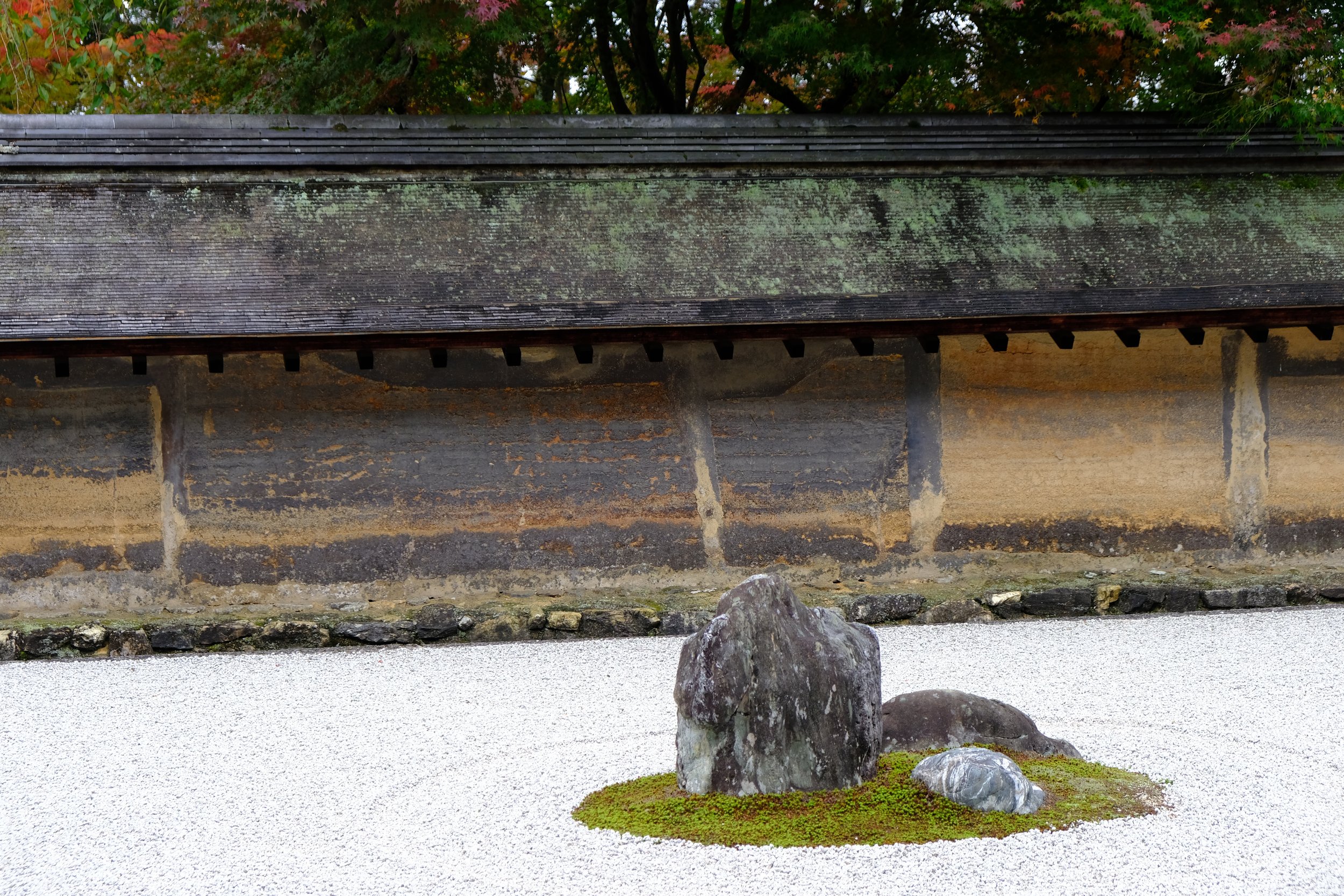
Ryōan-ji (竜安寺 The Temple of the Dragon at Peace), Kyoto, Japan. 2019